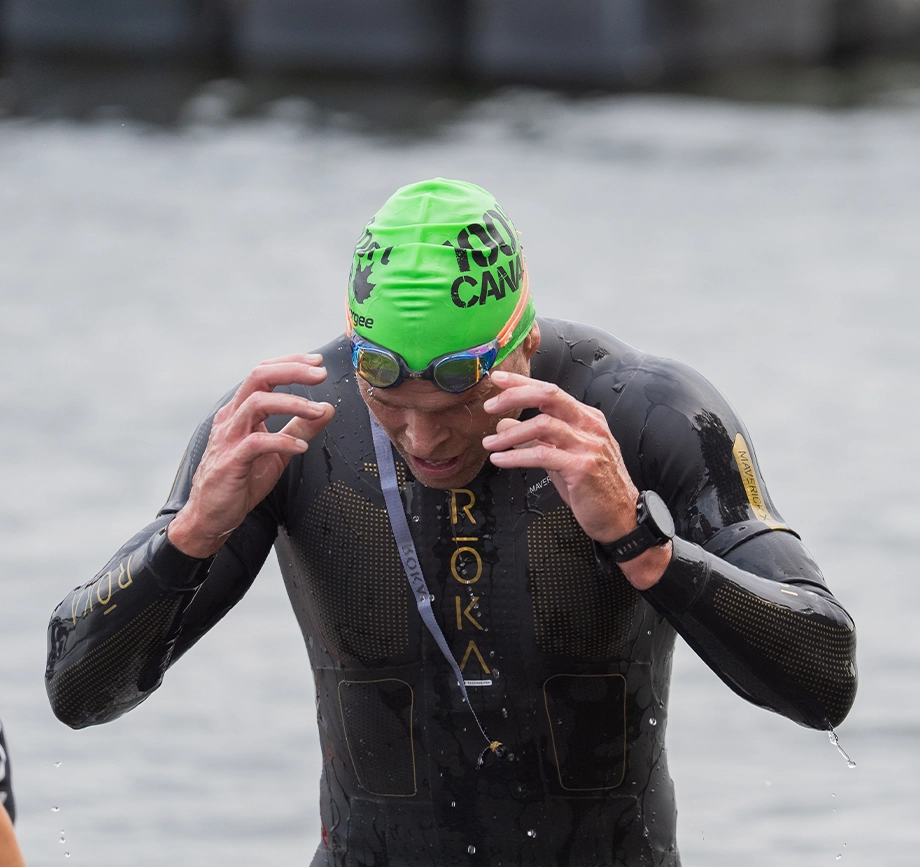
Swimming is the Absolute Worst...

Jesse Bruce

Probably not how I should start a blog encouraging people to swim. 😂

But honestly, you can run a marathon, crush workouts, and feel like an absolute machine
 then jump in the pool and feel like you’ve never trained a day in your life.

Swimming has a way of humbling people fast.

The good news? That’s also part of what makes it so valuable.

Swimming is one of the best ways to build your aerobic engine without constantly beating up your body. It improves your breathing, lung capacity, and teaches you something most endurance athletes struggle with:

How to relax under stress.

Here’s a few things that helped me make swimming suck a little less. 

1. Stop Telling Yourself You Hate It

If you keep saying swimming sucks, you’ll believe it.

Flip the script.

Yes, swimming is a slow process. Progress can feel painfully gradual compared to running or strength training. But it’s low impact, technical, and incredibly valuable for endurance and recovery.

The more relaxed you become, the better you swim.

And honestly, that lesson carries into racing and life in general. 

2. Check Your Ego

Swimming will humble you.

Don’t worry so much about your pace at first. Learn to stay smooth and relaxed before worrying about swimming fast.

You’ll have good days and bad days. Looking at your watch every length will just frustrate you.
Feel the water first.

Then, on days when you’re feeling good, crank out some repeats and take a peek at your pace.

Swimming is one of the only places where your fitness barely matters if your technique is off.

The harder you fight the water, the worse it gets. 

3. Learn the Drills, and Why You’re Doing Them

Don’t just blindly do drills because someone told you to.

Learn what they’re trying to teach you and find the ones that apply most to your weaknesses.

For example:

- If you have a short stroke, try catch-up drill.
- I personally tend to work way too hard in the water, so I use finger drag drills, lower stroke counts per length, and breathing patterns that force me to relax.

The best drills are the ones that actually make something “click” for you. 

4. Grab Some Toys

Pull buoys, paddles, flippers, buoyancy shorts
 they all have their place.

A pull buoy takes the legs out and lets you focus on your stroke. I also find it helps me feel my hip position and rotation better.

Paddles help teach the catch and pull.

Flippers help me stay long, reach properly, and control a smaller kick.

I’m honestly not even 100% sure that’s exactly what they’re all technically supposed to do
 but that’s what they do for me.

And that’s part of the point:
Experiment and find what helps you learn.

(Quick sidebar — don’t rely on buoyancy shorts all the time. Swimming without them is harder and usually drives your heart rate higher, which is actually great for cardiovascular fitness.) 

5. Watch Videos and Collect Cues

I watched — and still watch — a ton of swimming videos.

Eventually your social media algorithm starts feeding you good swim content anyway, so you might as well use it.

Some cues just click better than others depending on the person.

A few that work for me:

- Long and strong
- Reach from both ends
- Arms on train tracks
- Fingers scraping the bottom of the pool
- Rock, don’t roll
- Kick inside a bucket

Take the cues that make sense to you and ignore the rest. 

6. Start Small

A lot of people quit swimming because they try to do too much too soon.

Keep it simple:

- Start with 25–50m repeats
- Rest as much as needed
- Focus on one thing at a time
- Start with breathing
- Keep sessions short and frequent (2–3x/week)

You don’t need to be a great swimmer to start becoming more comfortable in the water.

You just need consistency. 

7. Don’t Let “Actual Swimmers” Discourage You

I wear a watch and still barely understand the pace clock.

I wear buoyancy shorts sometimes.

And honestly? I don’t care.

I’m not trying to win the swim. I’m trying to get out of the water where the race starts.

I’m training for triathlon. I wear a wetsuit in races anyway.

And if some pure swimmer wants to give you a hard time, welcome them to come do what you do after the pool:
Let’s go ride.
Then run.
Then workout.

They’ll probably get humbled too.

So just stay humble yourself and ignore the noise. 

Final Thought

Remember:
The swim is the one time during a triathlon where you actually get to relax.

If you do it right, you come out of the water calm, controlled, and ready to go to work.

And then


You get to fly on the bike.

Mantra for the water:
Just keep swimming.
And swimming.
And swimming.
And swimming.

Follow Us